It’s International Men’s Day 

It sure is. 

It’s the law that you can’t post about International Men’s Day without mentioning Richard Herring.  

But it’s telling that the need for Richard to inform men when International Men’s Day is has fallen away. People tend to know when the day is. They certainly know there is one. Thanks Richard. 

Caregiving 

This year, our Family Network has shared some communications about the role of dads and male care givers in the workplace. 

As a father of a five year old son, I found this content incredibly relatable, especially given a recent change in my caring arrangements. 

My partner Charlotte and I both work full time. This means, like so many parents, we have to juggle wrap care and school pick up and drop off times.  

We’re lucky to have help from family members to support us and we both work in roles with some level of flexibility. In fact, we’re lucky that the school offers wrap care. When I was a governor there, a decade or so ago, the nursery was operated privately with no wrap options. 

But it’s still a challenge. 

Charlotte recently changed her working hours, and now works her full time hours over four days. This obviously means extended days, and late finishes.  

As a result, if she’s at work, she can’t pick up Teddy. 

Which means that on the days where it isn’t my mum, it’s my responsibility. 

And the thing is, that’s both reasonable and manageable. It just means I need to be more prepared. 

For years I haven’t really had a finish time. While we’re contracted until 16:20, I often stay a bit later. I have tended to choose my finish time based on when I complete a task and who else is still in the office to interact with.  

But now, once or twice a week, I need to get to school before it closes. That means being a bit more organised with both where I am working and what time I finish.  

Crucially, I need to remember to do this.  

Roles and responsibilities 

And this is where the link to International Men’s Day comes in. I’ve probably fallen, subconsciously (mostly) into the stereotypical position that it’s not my responsibility to worry about who is picking up Teddy. 

How many times have you seen a TV drama where it’s the mum getting stressed out because they’re late for pick up? Or where the mum is the one calling grandparents or other mums to try and sort something out? Or even pleading, in desperation, for the father to help out on this occasion?  

All Her Fault is on example on our screens right now (it is worth a watch, btw). 

Why it matters 

So why have I written this? 

Well firstly, because I wanted to explore my thoughts. 

But also because, on some level I probably acted like I didn’t want people to think I had caring responsibilities to manage. If I did, is that because I thought people would judge me in a way I wasn’t happy about? 

But the reality is that I do. It doesn’t make me less able to do my job. Planning my day isn’t a sign of weakness, nor a lack of flexibility.   

It’s perfectly possible to better manage my diary, and my time. Countless other people do it – regardless of their gender. 

The reality is the world has changed. It’s rare you see families now when only one partner has to work. So that means that caring responsibilities need to be shared. They should be shared.  

And to be honest, the joy and excitement when Teddy sees me arrive to pick him up from school more than makes up for any inconvenience.  

Supporting a local institution

Egremont Crab Fair is the biggest event in the town. It isn’t a stretch to call it iconic. It’s infamous, the Gurning is international and it’s a highlight of the calendar for many in the town.

The fair has been running since 1267. That’s a lot of history and a lot of meaning for a town like ours.

But the fair doesn’t happen without the support of the community. The town and surrounding villages are always brilliant at turning out for the Fair and our fundraising events, but we need more than that.

We need your help.

Crowds gather for the World Gurning Championships

My Crab Fair journey

Like all school children at Wyndham in Egremont, my overriding memory is of the excitement when the fairground arrived in town. This annual milestone was celebrated wildly, and excitement for the Fair only increased as the week went on.

It was only really as I got older that I realised that the fairground was just one part of the event, and one largely out of the hands of the organisers.

Other memories from those early days include sitting on my dad’s shoulders watching the Gurning. Whether they’re real or imagined memories, I can picture this being on the then waste ground outside Egremont Co-op and at Bleach Green.

I can also remember watching a stunt display on the Crab Fair Field.

My more recent memories are of the Main Street on a Friday evening to watch the bands on offer.

Getting more involved

In late 2022, I remember seeing an advert calling out for more people to join the Crab Fair Committee. I considered this, and then the moment passed.

A few months later, a work colleague asked if I would be willing to get involved to support with their communications efforts.

Three fairs later, and I am both the communications officer and the secretary to the Egremont Crab Fair committee.

Those titles perhaps sound more grand than the reality. I tend to write our social media posts, produce the programme and take the minutes at meetings.

They’re they things I do in those roles. But, just as importantly,  I am also another pair of hands. I help ensure the Fair is ready to go, runs smoothly, and is tidied up quickly.

In practical terms, this means things like:

  • Helping organise events like our duck race
  • Stewarding sports events
  • Tidying the street and the field after any events
  • Making sure people know what is going on – by being a smiling face in high-vis!
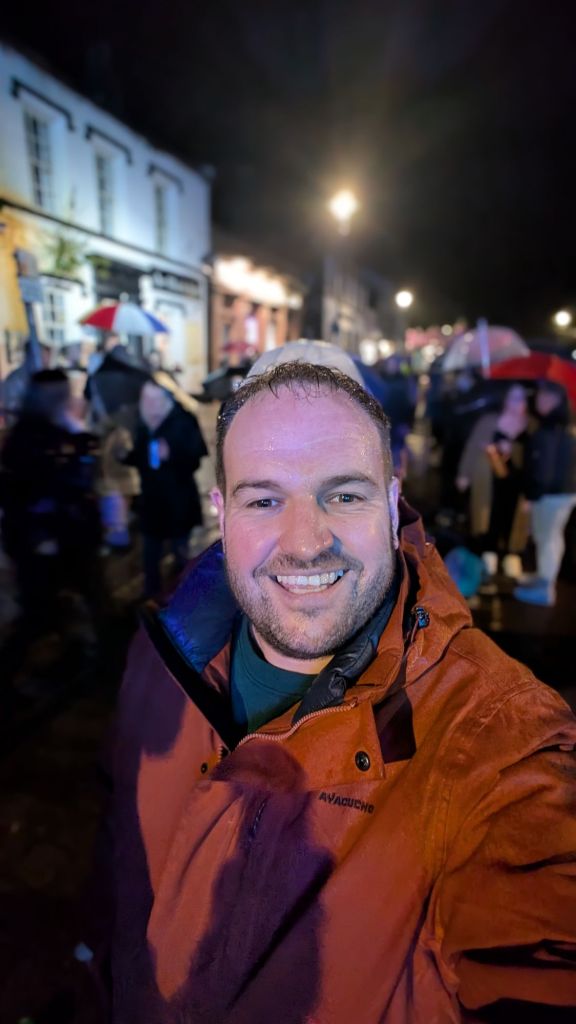
A Friday night soaking

I’ve even written funding bids, spoken on the radio, featured in a TV documentary and went live with the brilliant Cumbria Guide on their socials.

The challenge

The Crab Fair faces a number of challenges, some of which are interlinked. These include:

  • Fewer funding sources being available
  • Increasing costs, especially in recent years
  • An ever decreasing number of committee members
  • The weather

The top three listed there are all linked. The increase in costs is a challenge when we know there are fewer sources of funding than in the post. And the reduction in committee members over time, means that there are fewer people to try and raise alternative sources of funding.

And the bottom of these, just makes things worse.

The weather for the 2025 Fair was awful. This hit our two biggest sources of income – people paying to enter the field and Crab Fest, and therefore people spending money at the bar.

In the three years I’ve been involved, we have had a year with one awful day’s weather and one good day, a perfect weekend, and an awful weekend.

Sadly, when we have an awful year, with awful weather on the Saturday, we are going to struggle.

How you can help

Over the last few years, we’ve really tried to get more committee members, and have had some new members (like me) join the committee.

However, we recognise that this is too big a commitment for some people, and that attending a meeting each month might not be appealing.

So we’re now looking for people who might wish to support us, without as much commitment. There are lots of ways people could do this:

  • Organising a fundraising event (or even events, plural)
  • Promoting fundraising events (by creating posters or putting them up)
  • Coming to occasional meetings to offer ideas or suggestions on how we can improve
  • Organising a specific part of the Fair weekend

If you do want to get involved in the committee, either as a one-off, or each month, then why not come to our next meeting?

They take place on the first Tuesday of the month, at 7:15pm in Egremont La’al (Catholic) Club.

The next one is Tuesday 4 November 2025.

Keeping things going

All of the committee are committed to keeping Egremont Crab Fair going. We’re proud to be involved and understand the event’s importance to the town.

We all want to run the best event possible with the funding we have, and that’s what we’ll do.

If we have less funding then we will just be more creative about what we offer and how we do it.

Other ways to help

We’ve relaunched our GoFundMe campaign so people who want to donate a few quid to support the Fair can easily do so.

Click here to do this.

Information Overload

This is a blog post I shared at work back in May 2020. Five and half years on, it’s still relevant:

For the most part I have enjoyed working from home. It’s great to be able to get up a little later each day, and to have the full kitchen’s worth of food to consider whenever you fancy a snack. I can have the radio on to give me some background noise and can immediately dive out of the door for a walk once work is done.

I have even been around for all my parcel deliveries – funnily enough.

But some parts are hard. I miss my colleagues. I miss wandering down to the coffee bar or catching up with a colleague who happens to be in the building or passing my desk. I miss our Friday ritual of a fish and chip lunch and the occasional pint in the fab local (Gin and Beer It) after work.

The other thing that’s really challenging is information overload. I am friendly, chatty guy (well I do work in communications) and I am also an early adopter when it comes to new tech. This is usually a positive, but has led to a situation, in lockdown, where I am utterly bombarded by notifications.

This week, while writing some content for Mental Health Awareness Week, I stepped away from my phone, and logged out of the network on my laptop. The first thing I noticed was just how peaceful I found being unplugged. I was more productive and I am sure the quality of my work was improved.

The second thing was that when I logged back on, I had countless emails and a number of other notifications.

When I picked up my phone, my heart sank. I had a hundred WhatsApp messages from a dozen chats, I had ten new notifications from our work planning app, and I had work messages in our Teams app.

I realised that had I been connected to my phone the whole time, I’d have been distracted by these messages throughout. It’s no wonder I thought my work had improved!

The trouble is, I think it is part of a communications professional’s job to be connected. If someone needs us, then they expect to be able to get us. And I want to stay connected to my colleagues and friends, whenever I can. After all, they’re not passing my desk anymore.

So where does this leave me?

I actually think the solution is quite simple. In fact, a word I used above sums it up.

I unplug.

This means:

  • I move my phone away when I am working on a specific task or piece of writing
  • I turn off notifications from applications I don’t need to see (the Strava kudos and Instagram likes are the worst culprits here)
  • I choose a time to respond to emails and messages
  • I keep a line of demarcation between work and home by turning off work notifications when I am not at work
  • I accept I won’t see every message or read every notification (after all, I don’t try and read all of Twitter, do I?)

On top of this, I make sure to get my daily exercise. I have found that a long walk after work, with Craig Charles in the background, really does help me unwind.

Au revoir

On Sunday, the 2025 Tour de France came to an end and it was time to say au revoir, after three weeks, 76 hours and 2000+ miles of racing.

The final day of a tour always has a different feeling, but this year it was especially true.

Precedent means that the overall winner of that year’s General Classification is decided the day before. This means that the final day is ordinarily something of a procession, with champagne sipped en route, and a carnival atmosphere in the capital.

This year’s event was somewhat different, thanks to the introduction of a hill climb that split the bunch. It meant that winning the day’s stage wasn’t only of interest to the sprinters. Which is how Wout van Aert came to win the stage, showing a rare glimpse of the form that’s largely eluded him this year. 

Adieu 

But this year’s final stage also saw us say goodbye to ITV’s coverage of the Tour, which they’ve offered since 2001. 

As of next year, the live coverage of each of the Tour’s 21 stages will no longer be provided on free to air TV but will be found behind a (pricey) paywall. Hopefully highlights will remain available, but they’ll be harder to find.

The Tour de France has been on free to air TV since 1985. During that time, the sport’s popularity has soared to a peak, in the couple of years following the 2012 London Olympics, and has been declining since. But even with that dip, it’s infinitely more popular than it was 40 years ago, before we’d had 3 different British champions, winning in 6 of 7 years (curse you Nibali).

The reality is that it is a niche pursuit is likely to remain as such.

But ITV’s coverage helped try and stop this being the case and for so long it succeeded. Watching the Tour on ITV helped get me on my bike and for that I’ll be generally grateful – even if I did break my back!

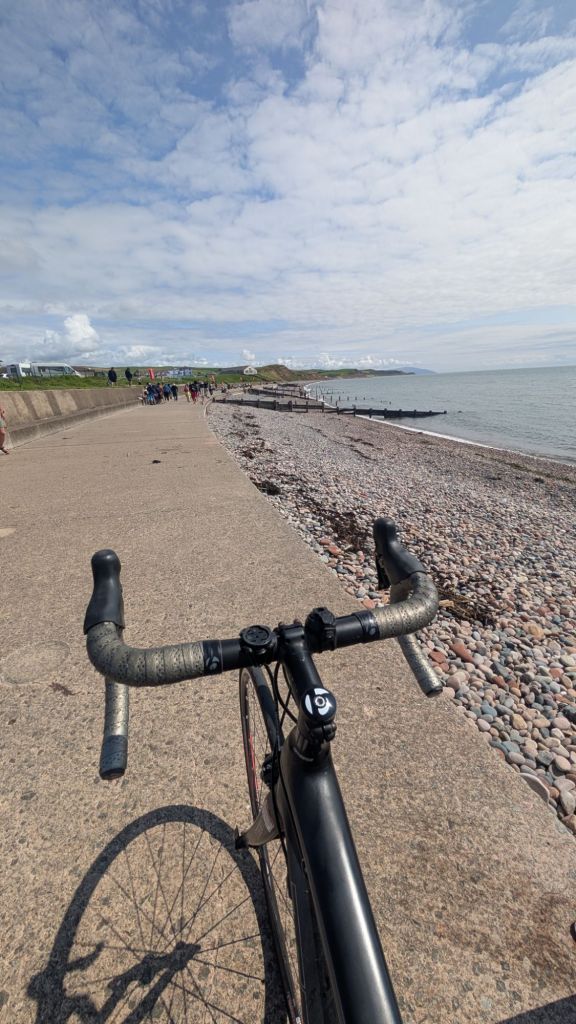
My bike and the road ahead on a recent ride at St Bees.

It’s especially sad to see the conclusion of ITV’s coverage, because it’s exceptional.

We’re not simply saying goodbye to hours of live coverage each day, but to a daily highlights’ magazine show that combined sport, history, culture, geography and travelogue into one hour’s commercial TV. Last year even featured a regular geology slot.

So it’s adieu to Gary Imlach’s squintingly professional hosting, and to Daniel Friebe and Matt Rendall’s engaging mix of trackside reporting and travelogue presenting. 

A screen grab from the last ever ITV Tour De France highlights show, featuring Chris Boardman, Alex Dowsett and Peter Kennaugh.

It’s adieu to the dream that is Ned Boulting and David Millar’s odd couple routine, combining enthusiastic amateur and former professional – both offering passionate insights to the sport that runs through thier veins.

Thankfullt, the latter will live on through their plans for a reinvigorated Never Strays Far podcast and vlog, lauching for the 2026 tour.

But it won’t be the same.

The storytelling will shift. And probably not subtly. The stories about castles will be gone. There will be no geology. It’ll be solely about the cycling.

Some will say that’s how it should be. I’m not.one of those people.

Adieu.

Five years old

Here’s my latest email to Teddy for his fifth birthday.

Hi Teddy

Tomorrow, you turn five years old. I can’t believe how fast those last five years have gone. But at the same time, I can barely remember the time when you weren’t in our lives.

I can’t imagine a time when you didn’t wake me at the crack of dawn on a weekend morning with a smile and a request for ‘breff-asst’ (despite being unwilling to rise on a weekday morning).

With each day that passes, you’re starting to show more of your personality. At (almost) five years old, we know you to be a kind and caring young lad. You’re sensitive and always consider how other people might be feeling.

You are naturally inquisitive and love learning more about the world you live in and the people who inhabit that life with you.

You love being around other people and always want them to have a nice time, just like you. That means you always share your sweets and your toys, even if you want to eat them or play with them yourself.

You are full of energy and love nothing more than running round and blowing off steam – especially at bedtime. Unless you’ve borrowed my phone or found your iPad, that is.

You are theatrical and love roleplaying games. Your imagination is something else. I am always bowled over by the games you invent for you and I to play. Though I am surprised just how often I play a daddy and you play a child called Teddy, even if you’re a pizza shop owner, a doctor or a footballer.

While you’re full of beans, you’re not yet a natural sportsman. But that’s ok, nor was I. And despite that, you always try – like at sports day last week or kicking a football with me. Though I do remember you told me recently that you don’t really love playing football, and that your favourite sport was actually jumping.

I love sitting and reading with you, as you get to grips with phonics. I also love sitting and watching Leeds with you, as you get to grips with that rollercoaster of emotions – at least for daddy.

Now your birthday is upon us, that means we’re nearing the school holidays. I can’t wait to have some adventures with you. They’ll start with exploring where we live and will see us taking days and weekends a bit further away.

Finally, for now, remember I love being your dad. I love just how happy you are to see me when I get home from your or from one of my occasional trips away. I’m never far from a huge hug and they keep me going on the more tiresome days.

When you read this email, you’ll know that I’ll be giving you the following advice:

Keep being you, keep being kind, keep being inquisitive and keep that open mind. Because those things make you you. Those things make you our perfect boy.

Love you always

Daddy

London pubs

I was once told that the way to choose street food in India was to follow the crowd. If somewhere was busy, it was good. And chances are that also meant fresh, which is probably just as important to a British stomach.

The same could be said of pubs in London.

I recently sought advice and recommendations on must visit pubs. I was told that the Sutton Arms, near the Barbican was a must visit.

I arrived to an attractive enough pub. The beer options were ok, and the pint I had was fine. Too cold, but fine.

The pub itself was empty. I was outnumbered by staff. There was no atmosphere. I was puzzled by the recommendation. Until I discovered another pub with the same name mere yards away.

As I arrived at the correct establishment, I found one of the best signs of a good London pub – people congregating on the two roadsides of the street corner establishment.

I suppose it’s the size, the geography and town planning of the city that make these street corner pubs so common. They’re certainly not as obvious in other UK cities. But they’re one of the things that make a London pub so iconic.

The crowds serve a purpose. They help you choose the place to visit. Sort the wheat from the chaff. 

When there are so many boozers, that let’s face it, look alike, this is important.

I visited London for a wedding a couple of years back. We had time to kill, so found a nice pub. We had a nice pint.

Later that weekend, I visited another pub and found the same identikit set of beer choices – cask or otherwise. They served the same snacks. They looked, they felt the same. The vibe was identical. And I felt cheated.

So now, trying to be discerning, I seek out recommendations. I want to visit the best ale houses.

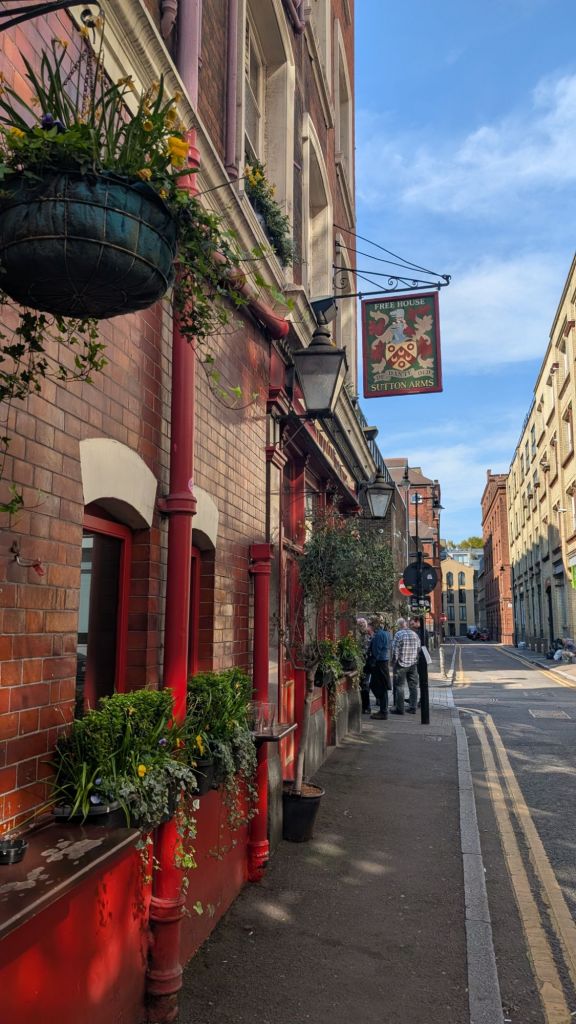
And now, sat with a pie and a pint at the Sutton Arms – the right Sutton Arms – I know it was the right decision.

The beer choices are broad and varied. The beer of the week, this sunny-mid-unseasonal-spring-heatwave day, is a chocolate stout. There is a sensational selection from Burning Sky. And a hot cupboard filled with award winning pies.

Award winning pie

Want more? The crisps are all Tayto (Northern Ireland, obvs), the lager is Budvar and the pavement is full.

The decor is unremarkable. But all the more remarkable for it. There is no oxblood banquette here, nor brass for man and boy. This is a boozer. And a good one at that.

In London, the sign of a good pub really isn’t the decor and it might not even be the range of beer. It’s all about the buzz, the crowds and the sense that you’ve hit the jackpot as you arrive. 

Long live the pub.

The news

We live in a dramatic world. A fast-paced world. A world where opinion and fact are blurred more than we can remember in our lifetimes, and where binary views have replaced nuance.

The recent US presidential election has only made this situation even more stark.

One of the consequences of this is that the news can feel overwhelming. Sometimes, it feels easier to tune out than taking the time to tune in.

I really felt this on Friday evening, when I started getting messages about Volodymyr Zelensky’s dramatic visit to the Oval Office.

I turned on the BBC News to hear a summary of the meeting and immediately felt both my anger and anxiety levels increase.

Trying to put aside my personal political beliefs, I was shocked by the aggressive, bullying nature of the conversation and the questions from the US representatives in the room.

The road ahead

I have always considered my political beliefs to be fairly moderate. I do believe the cliché that there is more in the world that unites us than divides us.

I prefer Great British Bake Off to the Apprentice.

I am more of a PM man than a Today listener.

I seek to collaborate, will compromise, and aim for a solution to help everyone to move forward.

But that doesn’t feel like the world we’re in now. The world of the deal. Where every discussion is a negotiation and where every issue has a sole wrong and right answer.

And it’s not just from those occupying the White House right now. Many more people are moving to a position where nuance doesn’t exist.

Think of some of the issues we’ve heard of in the recent past, and then think about how many people have tried to tell us that side A are right and side B are the enemy. Or vice versa. There’s the Ukraine and Russia, for a start; Israel and Palestine; the migrant crisis; government spending decision (winter fuel payments, defence vs aid spending, inheritance tax on farms, and so on).

I don’t think this situation is going to change any time soon. In fact, it’s likely to get worse as people’s extreme views make other people even more entrenched in their opposition. We might ourselves have taken a more polarised view to oppose those who we feel are increasingly extreme.

I don’t think that’s the way to go. I remain convinced that the best way to progress, to address an issue, to move forward, is to work together.

I am also convinced that moving to more extreme, less nuanced views, has a negative impact on my mental health.

So I’m not going to do it. That’s not to say I won’t call out things that are wrong, offensive or are an attempt at sanewashing.

Instead, I’m going to do the following:

  • Take a pause before responding to an issue, an event or an opinion.
  • Seek to understand the situation being discussed, and the different views of those involved.
  • Continue to be polite and reasoned in my responses to those with a different view.

In addition to those three, I might also take a break from the news, when I recognise I need a bit of clear headspace.

All the things I’ve recommended before to improve my mental health apply just as much here as they have before. They include:

  • Getting outdoors and doing more exercise
  • Taking part in activities that bring me joy
  • Turning off the phone notifications or taking a break from my device

If you’re feeling in any way similar to me, I urge you to do the same. And talk about this, so others realise it’s a common, reasonable view.

Nuclear Communications in the Age of AI: Key Takeaways from the Sector Forum

This blog was created by AI (Google Gemini Advanced) using this prompt:

Can you write me a 500 word blog post about a group-wide nuclear sector forum for communications staff.

Include an introduction then a paragraph or two under these headings:

Share and collaborate
It’s too late to stop the AI train
Having the courage of our convictions
We don’t have all the answers

In today’s fast-paced, information-saturated world, effective communication is more crucial than ever – especially in the nuclear sector, where public perception and trust play a pivotal role.

Recently, communications professionals from across the industry gathered for a group-wide forum to discuss the latest trends, challenges, and opportunities facing the field. The event fostered an atmosphere of open dialogue and collaboration, with attendees sharing insights, best practices, and innovative ideas.
Let’s delve into some of the key takeaways from this stimulating forum.

Share and collaborate

One of the overarching themes of the forum was the importance of sharing knowledge and collaborating across organizations.

In a sector as complex and interconnected as nuclear energy, it’s vital that communications professionals work together to build a cohesive and compelling narrative. This means breaking down silos, fostering open communication channels, and proactively sharing resources and expertise.

By pooling our collective knowledge and experience, we can develop more effective strategies, enhance our messaging, and ultimately strengthen public understanding and support for nuclear energy.

It’s too late to stop the AI train

Another key topic of discussion was the rapid advancement of artificial intelligence (AI) and its implications for the communications landscape. AI is already transforming the way we create, distribute, and consume content, and its impact is only set to grow in the years ahead.

The forum highlighted the need for communications professionals to embrace AI as a tool for enhancing efficiency, personalization, and engagement.

By harnessing the power of AI, we can streamline our workflows, tailor our messages to specific audiences, and create more immersive and interactive experiences.

However, it’s also essential to be mindful of the ethical considerations surrounding AI and ensure that its use aligns with our values and principles.

Having the courage of our convictions

The nuclear sector often faces challenging and contentious issues, from safety concerns to environmental impacts. Communications professionals need to have the courage of their convictions and be prepared to address these issues head-on, with transparency and honesty.

This means being willing to engage in difficult conversations, acknowledge legitimate concerns, and provide clear, evidence-based information. By demonstrating integrity and openness, we can build trust with the public and foster a more constructive dialogue around nuclear energy.

We don’t have all the answers

It’s important to recognize that we don’t have all the answers. The nuclear sector is constantly evolving, and new challenges and opportunities are emerging all the time.

As communications professionals, we need to be adaptable, curious, and willing to learn. This means staying abreast of the latest research, engaging with diverse perspectives, and continuously refining our strategies and tactics. By embracing a growth mindset, we can ensure that our communications efforts remain relevant, effective, and impactful in the years to come.

The group-wide nuclear sector forum provided a valuable opportunity for communications professionals to connect, learn, and collaborate. The insights shared and the connections made will undoubtedly shape the future of nuclear communications.

By embracing innovation, fostering collaboration, and demonstrating integrity, we can help build a brighter future for the nuclear industry and the communities it serves.

The NDA group corporate affairs forum

This week, 100-odd communications and stakeholder engagement professionals from across the NDA group met in Manchester.

A room filled with comms pros

Scarily, it’s about five years since that group last met up, and in that time lots has changed. The group has consolidated into four operating companies – Sellafield Ltd, Nuclear Waste Services (LLWR and RWM), Nuclear Restoration Services (Magnox and Dounreay) and Nuclear Transport Services (INS and DRS), alongside the NDA corporate centre.

It was great to get everyone together in one room, knowing we’re all united by an overarching mission, in a somewhat specialist sector.  

As you’d expect, I jotted down a few points I wanted to share. Well, I am a content creator, and a listicle is my friend.

Share and collaborate

The overriding message from the event was that we need to work together more. While teams at individual sites might be small, across the group we have huge range of talent and experience.

We need to take advantage of this to deliver the best we can do.

There are lots of different ways we can do so – some of which we already do and some we must explore.  

Ideas ranged from the formal (secondments, working groups, more regular events and a collaboration platform) to the simpler to arrange (a group-wide org chart, conversations with colleagues from other group companies).

While everyone supported the idea, we had less discussion around how we’ll all make it happen. One for the next event.  

Having the courage of our convictions

Working in the nuclear sector is brilliant. We do some amazing work and we’re addressing huge, gnarly problems for the country. But it’s not without its challenges.  

We must tell our story in a way that’s engaging and accessible. We have to do this while steering clear of issues or past failures, which might result in negative publicity.

This means that we tend to amplify our successes, but don’t necessarily share the failures that came before. The result is a story that is less rounded, or even lacks credibility.

We need to find a way of being more honest about our failings and setbacks, so we’re giving people the full story. To do this, we have to convince our owners and other stakeholders of its importance. And if we could manage to quantify or evidence the value of this, then even better.  

It’s a big ask.  

We don’t have all the answers

Linked to the above, one of the most interesting snippets I took away from the event was an anecdote from some graduates who visited the site. They felt disillusioned when they left. The picture they’d been given was of an organisation that had addressed the biggest technological challenges it faced.

Anyone who knows the nuclear sector, will know this is far from the case.  

It’s too late to stop the AI train…

The opening slide from Professor Anne Gregory’s AI keynote

Professor Anne Gregory was a welcome guest speaker. She spoke to us about AI.  

You could write a thesis on AI – in fact Anne probably has. Thankfully, you can summarise her key point quite easily – AI is here to stay and we need to use it.  

If you’re not sure how it works, or find it a daunting subject, now is the time to learn – it’s a valuable tool in your armoury. Now is also the time to try things that might not work. Mistakes are accepted, so fail fast and move on.

…but know its strengths and weaknesses

We heard that there are countless tools and applications to complete increasingly complex pieces of work. But it’s important to recognise the pitfalls. AI doesn’t understand context and can’t current offer reasoning abilities. The output won’t be perfect.

If you know this in advance, you can use these tools to produce engaging copy, plans, images, videos and more.  

Remember though, these should be used as a draft for adapting, rather than finished content.  

One of the biggest advantages of AI is that it can give you the gift of time. The trick for communications professionals is to use this in the most effective way. After all, it’s taking away our ‘comfort blanket’ of content generation, and leaving us the time for more ‘nebulous’, strategic tasks.  

What’s next

For me, it’s really simple. I want to connect with my group colleagues more often, and I will try out more AI tools, to find the ones that work for me.

For those who are interested, you can find an AI version of this blog, produced using similar headers to those above as prompts, here.

Teddy’s first day at school

Today was Teddy’s first day at school.

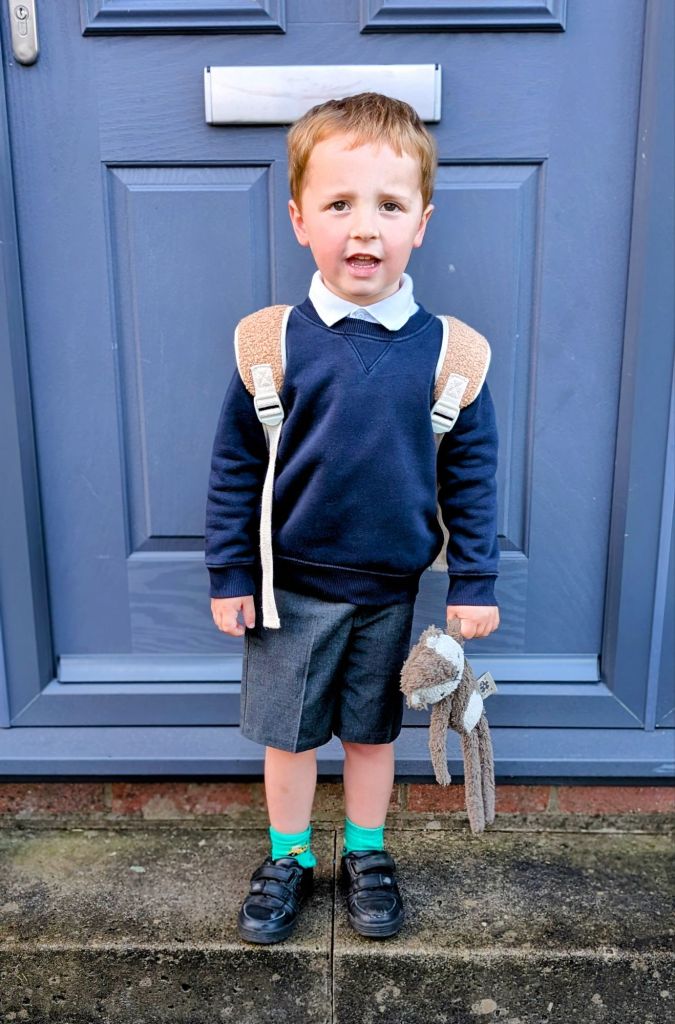
As is tradition, we took a picture on the doorstep, which I am obliged to share with you. What I didn’t need to do, but am going to, is share some reflections.

Pride: we got Teddy ready to go to the same building, at the same time as we have done for the last two years. Despite this, I felt an incredible sense of pride looking at the happy boy smiling back at me.

I loved that he was keen to get to school to see his friends and to learn how to read and write. It made my heart ache with joy to hear how he wanted to tell them about his summer and ask about their’s. I was emotional as he asked about his favourite teaching assistant who left the school last year – especially as she’d sent Teddy a good luck message last night.

Tradition and routine: despite getting bigger, Teddy still wanted to be carried on my shoulders from our house to the school doors. And despite him getting bigger, I was happy to do it.

We had a lovely conversation about how he needed to do what the teacher told him (“ok, dad”), sit down when he was told to (“I am good at that daddy!”) and tidy up (“good at that too”). I also told him he needed to listen, but I am not sure he heard me.

Learning: I tried to explain to Teddy that school was different to nursery and he’d be expected to learn things now, as well as play.

Teddy told me he was looking forward to learning to read and write. He said that he can scribble, but that doesn’t look like when an adult writes. Except for the letter T.

After school, he exclaimed to Charlotte that they “forgot to teach me how to read.” Hopefully that enthusiasm won’t wane as he starts to learn this skill.

Story-telling: The conversation moved on to jobs.  I told Teddy that I write things for a living. He wondered what I wrote. I considered explaining communications theory, and extolling the virtues of stakeholder engagement and my views as to why internal communication is so important.

Instead, I settled on story-telling. That must have been good enough – he told me that he would tell the teachers, because he wasn’t sure they’d have remembered over the summer.

For the record, today Teddy wants to be a solider (and his favourite colour is green, his favourite food is pasta and his favourite things are monster trucks)/

Goodbye: And after a final, nervous hug, Teddy ran off to see his friends – old and new. And I set off home for my first meeting of the day, wondering where the last four years have gone.

The smile remained on my face.